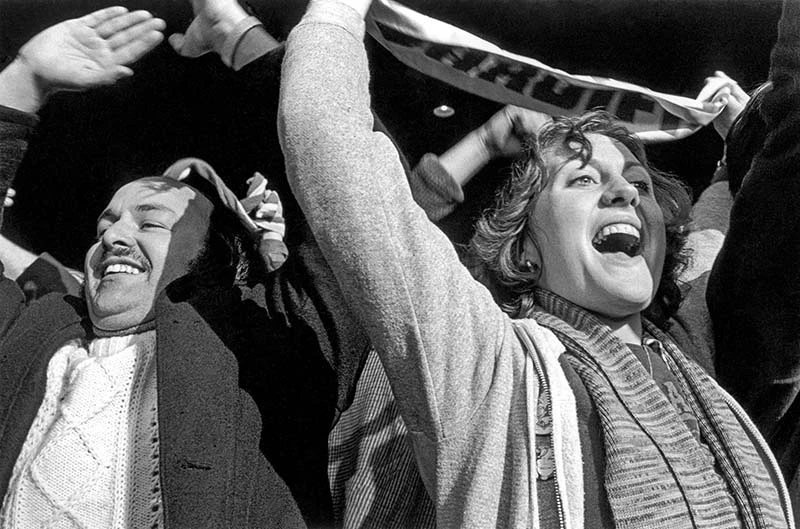
Documentary photographer Eve Arnold was a woman in a male-dominated field. Aware that people changed once a camera was present, she worked as unobtrusively as possible, always capturing the humanity of her subjects.
Arnold was born in Philadelphia to Russian-Jewish immigrant parents. After leaving school in 1946, she got a job at a Kodak processing factory in New Jersey and soon became a manager while taking photographs in her own time. Marriage and a child soon followed, and in 1948 she took a photography course at the New School for Social Research in New York. She became one of Magnum’s first female members in 1951 and a full member in 1957.
In the early 1950s Arnold was drawn to the subject of poor migrant workers – she herself had grown up in poverty during the Depression. At the other end of the spectrum, in 1952 she met Marilyn Monroe and struck up a friendship with the star, photographing her many times over the following decade. Her most famous images were taken on the set of Misfits in 1960, which provide a glimpse of the real woman behind the icon.
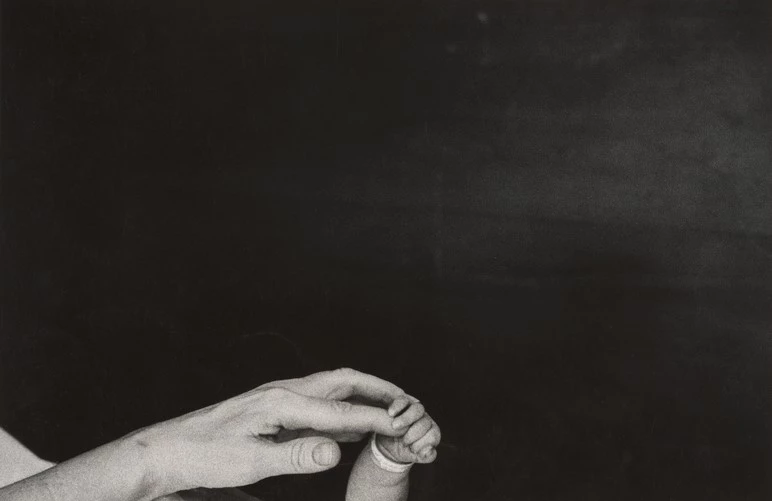
Women were a constant theme of Arnold’s work. In one of her twelve books, The Unretouched Woman (1974), she presented women of all ages and backgrounds at different stages of their lives, from birth to betrothal and divorce – all captured through a woman’s lens.
In 1962 she moved to England to send her son to school and stayed for the rest of her life. She died three months before her hundredth birthday.
Mari Griffith has worked in the field of museums and art galleries for 30 years, developing and overseeing learning and interpretation provision for public collections and exhibitions. With a B.A. in Italian and Art History and an M.A. in Renaissance Studies, both from the University of London, she began her career as a lecturer at the National Gallery before moving to the National Gallery of Art in Washington D.C. where she worked on exhibition interpretation, and the Royal Academy of Arts in London where she ran the public programmes (adult learning). Since then, her work in art and heritage interpretation has taken her to several countries, including three years in Rome. She now works as a freelance writer, editor and translator – mostly on art.